THE 2026 SOLAR ECLIPSE IN ICELAND: WHAT WE SAW, WHAT WE LEARNED, AND WHY IT WAS SO SPECIAL

On August 12, 2026, Iceland became one of the most remarkable places in the world to witness a total solar eclipse. For a few unforgettable minutes, the Moon passed between the Earth and the Sun, transforming daylight into an eerie twilight and creating an experience that many people will remember for the rest of their lives.
Thousands of visitors traveled to Iceland to witness the event, while locals and travelers alike watched the landscape change beneath a sky unlike any other.
More Than an Astronomical Event
A solar eclipse is much more than a visual spectacle. It is a rare opportunity to observe how our environment responds to a sudden and dramatic change in light.
During the eclipse, many people reported the unique quality of the light, the changing colors of the landscape, and the unusual atmosphere that settled over the country. As happens during total eclipses, temperatures dropped slightly in some areas, and for a brief moment, familiar landscapes felt completely different.
Iceland's Front-Row Seat
Western Iceland, including Reykjavík, the Snæfellsnes Peninsula, Reykjanes, and parts of the Westfjords, enjoyed some of the best views of the path of totality, weather permitting. Other regions experienced a partial eclipse, with a large portion of the Sun obscured by the Moon.
As always in Iceland, weather played an important role in the experience. Some locations enjoyed clear skies, while others found themselves watching clouds drift across the horizon. Yet even for those who experienced only brief glimpses, the event remained extraordinary.
Did Nature Notice?
One of the most fascinating questions surrounding any eclipse is how animals respond to the sudden darkness.
Many species rely on natural light to regulate their daily activities, including feeding, resting, navigating, and communicating. Because of this, some animals may temporarily react as if evening has arrived.
Scientists have documented a variety of responses during previous eclipses, ranging from changes in bird activity to alterations in insect behavior. However, reactions are often subtle and can vary greatly between species and individuals.
What About Whales?
For those of us who spend time at sea, one question was especially intriguing: how would whales respond?
The honest answer is that we still know very little. There are not yet enough scientific studies to fully understand how different whale species react to a solar eclipse.
Some marine mammals may notice the sudden reduction in light, while others may continue their normal activities without any obvious change in behavior. Observations collected during eclipses can help researchers better understand how these animals perceive and respond to their environment.
Whether any noticeable behavioral changes occurred during this eclipse or not, events like these remind us how much there is still to learn about life in the ocean.
A Moment to Remember
Solar eclipses are rare reminders of the incredible connections between the Earth, the Moon, and the Sun. For a few minutes, familiar landscapes are transformed, daily routines pause, and people gather together to witness something truly extraordinary.
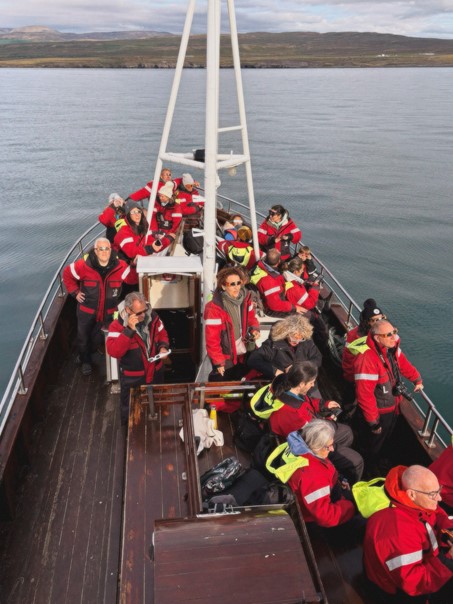
Whether you watched from a lava field, a mountain viewpoint, a coastal cliff, or out at sea, the 2026 solar eclipse was a moment that brought science, nature, and wonder together.
And perhaps that is why eclipses continue to fascinate us: they remind us that even in a world we think we know well, there are still moments capable of stopping us in our tracks and making us look up at the sky in awe.
Text: Carla Rojas Vila, Photos: Fabio Marcelino, Clara Perez Martinez, Natalia Amigo Chaparro (guides)